Adrian Henri
March 1992
This general election is a choice between a Conservative government
paralysed by recession, and a Labour government determined to
get on with building recovery.
Gripped by the longest recession since the war, Britain needs
a government with a clear sense of direction and purpose. A government
with the people and the policies to get Britain working again
and to achieve sustained recovery - strength with staying power.
Labour will be such a government.
But this election is not only a choice between policies, important
though both are. It is also a choice between values.
At the core of our convictions is belief in individual liberty.
We therefore believe:
First, that for liberty to have real meaning the standards of
community provision must be high and access to that provision
must be wide.
Second, that those rights of the individual must, like all others
in a free society, belong to all men and women of every age, class
and ethnic origin and be balanced by responsibilities of fair
contribution and law-abiding conduct.
Third, that for rights and responsibilities to be exercised fully
and fairly, government in Britain as in other industrialised democracies,
must work to build prosperity by properly supporting research,
innovation, the improvement of skills, the infrastructure and
long-term industrial development.
Our vision for Britain is founded on these values. Guided by them,
we will make our country more competitive, creative, and just;
more secure against crime, aggression and environmental danger.
We want government to serve the whole nation - using its power
to realise this vision.
Labour will be such a government.
These are our convictions and we will work to fulfil them. They
are also down-to-earth aims - essential objectives in a country
hit by recession, suffering run-down public services and facing
the intensifying pressures of European and global economic competition.
Ml of those realities require that the government provides: a
stable economic environment; education and training that fosters
the abilities of all young people and adults; a firm emphasis
on productive investment in both the public and private sectors.
Labour will implement and maintain those policies. They are vital
for prosperity, for consistently low inflation and for continuous
improvement in economic performance and living standards. They
are also fundamental to improving the quality and quantity of
provision in health and social services, and to combating poverty
We have absolute commitment to a high-quality National Health
Service, free at time of need and not fractured and weakened by
underfunding and a commercialised contract system. We will get
on with fulfilling that commitment from the moment of our election
- by strengthening and modernising the NHS, by extending care
in the community and by establishing the National Health Initiative
to prevent illness.
Our pledges to increase the income of pensioners and families
with children will urgently be fulfilled. Our undertakings to
stop the perpetual experiments in schools and to raise standards
of investment and achievement in education will be kept in full.
These policies - like those to increase house-building, improve
transport and protect the environment - are not only important
to the well-being of the British people now. They are vital preparations
for the future. In that future, we are determined that Britain
will be a leader in the New Europe, setting higher standards and
not surrendering influence by opting out. We have confidence in
our country and in the qualities and potential of its people.
We want to nourish their artistic, scientific, sporting and other
abilities. And we want to enhance their democratic power too.
We shall therefore make constitutional and other changes that
will give renewed vitality to our democracy We shall empower people
as citizens and as consumers of public and private services. We
will strengthen equality before the law and equality of opportunity
for the majority of the population -women. Neither their legal
status nor their chances in education, training and employment
are full or free. We will ensure that the barriers to fairness
are removed.
These policies, like many others, manifest our practical commitment
to freedom. That purpose is not confined to the shores of our
country. In an age where liberty has made great advances in the
world, there is still conflict, instability and want, causing
great misery and inhibiting the peace and co-operation which we
want to help to build. We shall, therefore ensure that our country
has the defence capacity, the strength of alliance and the peace-making
commitment necessary to safeguard the United Kingdom, to participate
in international negotiations for disarmament, to deter aggression
and to contribute to constructing a New World Order, now feasible
through the strengthened United Nations.
In our relations with the new democracies of Central and Eastern
Europe as well as with the poverty-stricken peoples of the South,
we will work from the principle that political freedom needs the
sure foundation of economic security. In this increasingly inter-dependent
world there are no distant crises. The Labour government will
therefore, as a matter of moral obligation and in the material
interests of our country, foster the development and trade relationships
necessary for the advance of economic security, political democracy
and respect for human rights.
The United Kingdom has been through 13 years in which unemployment
has more than doubled, irreplaceable assets have been wasted,
markets at home and abroad have been lost, manufacturing investment
has fallen, poverty has increased, the crime rate has rocketed,
and talents have been neglected.
Now our country faces clear alternatives.
A Conservative government would mean a repeat of the same, stale
policies which brought economic insecurity, privatised and underfunded
public services and increased social division. The Conservatives
have no policies which would mean sustained recovery, higher health
care or improved educational standards. The arrogance remains
which brought us the poll tax, centralisation in Britain and isolation
in Europe.
If they can't get it right in 13 years, they never will.
The Labour government will mean a fresh start for Britain. It
will mean strong and continued emphasis on investment for economic
strength. It will mean action to help families, fair taxation,
incentives for enterprise and support for essential community
services.
It will mean greater freedom, securitv and opportunity. It will
mean change for the better.
It's time to make that change.
It's time for Labour.
Today. millions of people fear losing their job, their home or their business. The new Labour government's National Recovery Programme will start to remove that fear with immediate action on investment. jobs and training. It will combat recession now and build sustained and sustainable recovery for the future.
Britain's economic problems are deep-seated. We will not be able to do at once everything that we would like to do. But we will get down to business right away. And as with any properly-run business. our immediate programme will be part of a strategy for long-term success.
Action for industry
1 We will provide enhanced capital allowances to encourage companies
immediately to bring forward manufacturing investment in new machinery
and plant, innovation and design. This will last for a limited
period.
2. We will introducc an investment tax incentive tailored to the
special needs of small businesses.
3. We will immediately begin the phased release of receipts from
the sale of council houses land and property receipts to allow
local authorities to build new homes and improve old ones. More
building workers in the recession-savaged construction and building
supply industries will be employed and more families rehoused.
Equivalent arrangements will be made in Scotland.
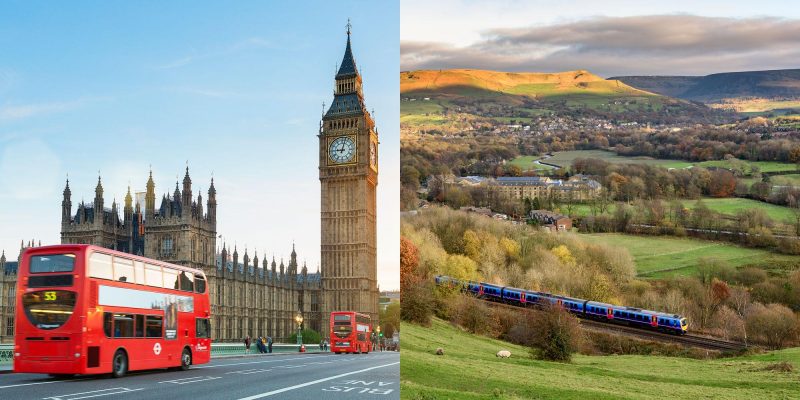
4. We will allow British Rail to proceed with a leasing scheme
of 188 new Networker trains on the North Kent line - the first
step in securing private investment to help modernise Britain's
railways and protect our environment.
Action for jobs
5. Housing investment will generate jobs. We will also establish
a work programme combining three days a week work for the unemployed
- paid at the proper rate - with two days' training and job seeking.
This will benefit the community and ensure that unemployed people
are offered a range of employment and training opportunities.
The programme which can be quickly and easily established will
allow us to start bringing down unemployment immediately. Our
aim is to prevent long-term unemployment rather than just trying
to cope with it after it has occurred
Action for skills and schools
6. We will restore last year's training cuts which caused so much
damage to training for young people and the unemployed. We will
establish a new cash-limited Skills for the 90s fund with
an initial budget of £300 million, to upgrade the training
of those in work. Investment will be targeted particularly at
areas of skill shortages and will
give people who are now unskilled the chance to acquire basic
skills.
7. Over the next 22 months, additional resources of at least £600
million will be available for investment in education. Amongst
other projects, this will help to tackle equipment shortages and
the backlog of school repairs.
Action for the NHS
Over the next 22 months. additional at least £1 billion will
be available for investment in the National Health Service. This
will help the NHS to make real advances in care and treatment.
Action for children
9. We will start to increase nursery education places for three
and four year olds by making sure that local councils actually
use the money they receive for nursery education to create new
places and by switching capital funds
earmarked for the City Technology College programmes. This will
lead to the rapid creation of 25,000 new places.
10. We will extend the exemption from tax which applies to workplace
nurseries to all forms of employer assistance with childcare.
Getting results
Every action we propose makes sense by itself. Together our proposals
add up to a co-ordinated programme for recovery.
By investing in house-building and repairs, we start to rehouse
homeless people.
By investing in public transport, we start to transform commuters'
lives and create a cleaner environment.
By investing in the NHS, we offer new security to the patients
and the public.
By investing in education we nourish the talents of children and
lay the basis for future success.
With each step we employ more workers in industries from construction
and computer software to high-tech engineering printing and publishing.
We enable businesses to thrive. We save taxpayers' money on benefits.
We transform unemployment claimants into employed contributors.
Labour's programme for national recovery will this year help bring
Britain out of recession. Public investment will modernise services
help business and industry and stimulate private investment. It
will make you and your family better off.
Britain is in a race for economic survival and success. Faced
with intense competition, companies and countries can succeed
only by constantly improving their performance. Every employee
in every enterprise must be involved in a new partnership so that
trained and talented people can use the most modern technologies
to create top-quality products.
But none of this will happen with a government that believes that
the best thing is to do nothing. Three thousand men and women
have lost their jobs on every working day since John Major became
Prime Minister. Every week 900 businesses go bankrupt. Every dav
200 families lose their homes.
The Conservatives have created the longest recession for 60 years. They have no idea how to get us out of it and even less idea how to stay out of it. Britain needs a Labour government which will back British industry in the way our competitors back theirs.
A government which business can do business with
Modern government has a strategic role not to replace the market
but to ensure that the market works properly. Other competitors
in Europe and elsewhere recognise that industrial policy must
be at the heart of economic policy. It is the government's responsibility
to create the conditions for enterprise to thrive.
Business needs sustained and balanced growth, with stable exchange
rates, steady and competitive interest rates and low inflation.
We will deliver them.
Business must have a high level of education science and skills.
Incentives for high-tech investment. Modern transport.
Strong regional economies for new developments. We will deliver
them.
We will keep prices down
Inflation has been suppressed by recession. But it has not been
cured.
To curb inflation. Labour will maintain the value of the pound
within the European Exchange Rate Mechanism. We will manage credit
sensibly. We will stop excessive price rises in water, electricity,
telephones, transport and NHS prescriptions.
The only way to defeat inflation in the medium term is to raise
productivity substantially. By promoting investment and improving
skills we will tackle the underlying causes of inflation.
We will introduce fair taxes
Attacking poverty is an essential component of Labour's programme
for national recovery and prosperity. The most effective way to
reduce poverty quickly is to increase child benefit and pensions
and take low-paid people out of taxation. To achieve these goals,
we will reform the national insurance and income tax system.
We will increase child benefit to £9.95 a week for all children
with the full value going to every family. This measure will benefit
seven million families and is worth £127.40 a year to a family
with two children.
We will increase the basic retirement pension by an extra £5
a week for a single person and £8 for a married couple. All
pensioners will receive the full increase which will also go to
widows and others on benefits linked by statute to the basic pension
level. Twelve million people will benefit.
We will abolish the two per cent national insurance contribution
on earnings under £54 a week - effectively a £56 annual
entry fee into the national insurance system.
At present employees earning less than
£405 a week pay contributions on all their earnings, while
above that level no contributions are paid at all. This is an
unfair anomaly in our tax structure. The ceiling on contributions
will therefore be abolished.
We will take 740,000 taxpayers out of taxation altogether by increasing
the personal allowance and wife's earned income allowance by more
than inflation. Married couples will have the option of splitting
the married couple's allowance between them as they choose.
The basic rate of tax will remain unchanged at 25 per cent, as
will the 40 per cent rate. A new top rate income tax of 50 per
cent will apply to individuals with an income of at least £40,000
this year.
Labour's tax and benefit changes are self-financing. They are
fair. And they will make every individual employee on earnings
up to at least £22,000 a year better off.
We will reform decision-making
Britain urgently needs a better way of making economic decisions.
Government must decide at the same time how much to spend and
how to pay for spending. The Budget should decide both.
Every autumn, we will make a State of the Nation report
on the British economy. Our national economic assessment will
then allow employers, trade unions and other social partners to
consider Britain's competitiveness and the competing claims on
national output. These considerations will be an important influence
on collective bargaining.
In order to provide honest information about the state of the
British economy, we will make the Central Statistical Office independent
and free from political interference.
We will halt the deterioration which has taken place in the pay
and conditions of many public service workers - often through
pay settlements which have been arbitrarily imposed upon them.
We will seek fairer and more rational ways of determining public
sector pay within clearly defined budget limits.
We will cut unemployment
We are determined to make a swift reduction in unemployment and
have explained in our NationaI Recovery Programme just how this
will be done. It includes immediate action for unemployed people,
as well as direct investment - for instance, in construction -
to create thousands of new jobs.
Steady and sustained economic growth will generate jobs that last.
Better training will help people get back to work.
Unemployment must be tackled by the European Community as a whole.
We will use our influence in Europe to secure the necessary policies
for co-ordinated growth.
We will modernise Britain's industries
It is time to rebuild Britain's industrial strength. For lasting
recovery, Britain needs a modern industrial policy designed to
build skills, upgrade technology, encourage industry in every
region and expand exports.
An Investment Decade for Britain will start with the immediate
introduction of enhanced investment allowances (see page 9). We
will help Britain's high-technology industries with a 25% tax
credit for additional investment in
research and development. Small firms will be assisted with a
new investment scheme, combining a cash-limited fund for new investments
with tax incentives tailored to heir special needs.
Britain's industrial future depends on transforming our inventive
genius into manufacturing strength. Labour will work with industry
to establish British Technology Enterprise and create Technology
Trusts throughout Britain, building bridges between industries
and universities and helping firms turn good ideas into commercial
products. We will encourage the development of the most modern
telecommunications networks.
Labour's Minister for Science will develop a national strategy
to promote high-quality science and technology, so that Britain
can better anticipate and respond to the challenges of the future.
All over the world, industries face unprecedented environmental
challenges. We will support new research into
environmentally-friendly technologies and launch a Great Environment
Exhibition to publicise and to promote sales of the cleanest British
technologies.
We will strengthen our regional economies
We will establish new Regional Development Agencies in England,
strengthen Scottish Enterprise and the Welsh Development Agency
and modernise regional incentives. Regional agencies will become
powerhouses for industrial development, encouraging investment,
technology and skills. The Scottish Parliament will have a vital
role in building the competitive strength of the Scottish economy.
Our new Welsh Assembly will also have important economic responsibilities.
Labour's National Investment Bank, operating on strictly commercial
lines, will bring public and private sector together to invest
in long-term regional and national infrastructure projects.
Small and growing businesses will have a new deal. As well as
the lowest possible interest rates, they need the backing on which
their competitors can rely in France and Germany. Labour will
establish a network of one-stop advice centres providing them
with access to high-quality specialist assistance.
We will give special attention to the establishment of small businesses
by women, and members of the ethnic minority communities, who
often face difficulties raising venture capital.
Under the Conservatives, Britain has moved from manufacturing
trade surplus to manufacturing trade deficit. The recent privatisation
of the Export Credit Guarantee Department can only do further
damage. Labour will create modern export services for the nation
and the regions.
We will invest in modern transport
Commuters and companies need fast, safe transport Labour will
act to make sure they get it. It is absurd that French Railways
can raise funds for new investment in the City of London, when
British Rail is not allowed to do so. We will remove these restrictions.
Leasing schemes will allow large-scale investments to be financed
at relatively little
cost to the public sector borrowing requirement.
Private finance will also be mobilised for a high-speed rail network
which will eventually link every region to the Channel Tunnel
with proper environmental safeguards.
We will improve energy supplies
Families, commerce and industry need heat, light and power at
prices they, can afford. Britain is well placed with reserves
of coal, oil and gas which must be husbanded in a national energy
policy to balance the needs of the present with those of the future.
We will encourage enhanced recovery of oil from the North Sea
and avoid becoming too dependent in on imported fuel. We will
meet our international obligations to reduce harmful chimney emissions.
We will restore public control of the National Grid and give it
new duties and powers to ensure the long-term security of electricity
supplies. We will secure the long-term future of the coal industry
by reducing imports, stopping the 'dash for gas' and reining back
on open-casting. We will retain the Department of Energy and move
its petroleum engineering directorate to Aberdeen. We will require
the energy companies to invest in R&D, and encourage the development
of clean-burn coal technology.
We will invest in people at work
The key to a successful modern economy is a well-educated and
motivated workforce. We cannot compete on the basis of low educational
standards or poor working conditions. Britain's future must be
high skill, high wage and high tech.
Two things are needed: a training revolution to modernise people's
skills, and rights for employees to fair treatment at work.
We will offer unemployed people a range of employment and training
opportunities. Our aim is to ensure that anyone who is unemployed
for more than six months has a choice of job experience or training.
We will also help the people often left out of good training opportunities,
including the disabled, women returning after caring for children,
and those with special educational needs.
Expanded childcare will help women return to work and undertake
training. A critical task is to upgrade the skills of people in
work. Training and Enterprise Councils will be retained, reformed
and made more broadly representative of their local communities
and given stable budgets.
Instead of the present series of piecemeal initiatives we will
establish a coherent national training policy to meet the needs
of industry and provide people with real equal opportunities at
work. All employers, except for very small businesses, will be
obliged to invest a minimum amount on training their workforce
or make a contribution to the local or national training effort.
Training will be a real partnership between government and industry,
not an excuse to shift all the burden onto employers.
We will transform the Careers Service to make careers advice available
to everyone, young or old, employed or unemployed.
Britain cannot get the best performance from our employees by
giving them the worst treatment. There will be a fair framework
of law for both employers and unions. There will be no return
to the trade union legislation of the 1970s. Ballots before strikes
and for union elections will stay. There will be no mass or flying
pickets. But our individual employees are entitled to be treated
at least as fairly as their colleagues in Europe.
We will opt in to the Social Chapter of the new European Treaty
and introduce employment standards common in successful economies,
including the best health and safety legislation. The existing
protection provided for people engaged in especially hazardous
work will be retained.
Women and men must be able to care for their family as well as
earn a living. We will give all employees equal rights and status
under the law, whether they are full-time or part-time, permanent
or temporary. We aim to guarantee every woman in employment the
right to 14 weeks' maternity leave on full pay, and to give fathers
paternity leave, bringing Britain into line with the better provision
elsewhere in the European Community.
Employees will have new rights to be consulted and informed about
decisions which affect them, as well as the right to union membership
and representation. We will restore union rights at GCHQ. Anti-discrimination
law will be strengthened and we will consider as part of that
law outlawing discrimination in employment on the grounds of age.
Britain's Wages Councils set minimum wages for about 2.5 million
people. But there is no minimum wage for all employees. We will
end the scandal of poverty pay and bring Britain into line with
the rest of Europe by introducing a statutory minimum wage of
£3.4O an hour. This is a major but long overdue reform which
will benefit around four million low-paid people, 80 per cent
of whom are women. We will consult widely to ensure smooth implementation.
We will promote a stake for employees
Employees should have the opportunity to own collectively a significant
stake in the company for which they work, through a democratic
Employee Share Ownership Plan (ESOP) or a co-operative. We will
strengthen support for such schemes and consult about the possibility
of creating a new tax incentive to encourage companies to establish
or extend an ESOP or set up a co-operative.
Recent pension fund scandals have shown how right Labour has been
to call for stronger legal protection. We will reform the law
so that pension funds belong to their members, not to employers.
Half of the pension trustees will be employees, with an independent
chairman, and pensioners will be represented.
Labour will stop the privatisation of the NHS and return opted-out hospitals and other services to the local NHS. We will halt the commercial market which is creating a two-tier health service.
Our commitment to the NHS
For a decade, the Conservatives have
persistently underfunded the health service. It may well take
at least the lifetime of a Parliament to put things right, but
Labour will start immediately. Instead of cutting income tax,
we will make additional resources of at least £1 billion
available for investment in the NHS over the next 22 months. Each
year thereafter, we will continue to tackle underfunding. Unlike
the Conservatives, we ill not impose any new health charges.
Labour will recognise the additional claims on the NHS from the
growing number of very elderly people and the development of medical
technology and knowledge. We will retain the pay review bodies.
We will not cheat
health authorities by agreeing pay awards which are not fully
funded and leaving managers to bridge the gap by cutting patient
care. We will invest in the modernisation of our hospitals and
tackle the backlog of repairs and maintenance.
We will also launch a new programme to invest £60 million
in the modernisation of Britain's cancer services, using the resources
we will save by scrapping the Conservatives' tax handout on private
medical insurance. Within our overall budget, we will tackle the
shortage of intensive care beds with a special programme providing
an additional £25 million to expand this life-saving service.
A healthy Britain
Labour will launch a National Health Initiative to promote physical
and mental health from birth to old age. This initiative will
be led by the Department of Health and Community Care and by a
new Cabinet committee that will cut through departmental boundaries.
We will set new targets to cut the inequalities in health between
social classes and ethnic groups. Our Health Initiative will set
targets for better health, backed by effective action. We will,
for instance:
A modern NHS
We will create a modern, efficient NHS with incentives to improve performance - but without the queue-jumping
and waste created by a market in health care.
We will provide more services through local health centres and
other community settings. We will give GPs the power to insist
on improvements in service to all the patients in a neighbourhood.
We will give the outcome of treatment the same importance as the
throughput of treatment. Our new Health Quality Commission will
monitor the quality of care and raise standards.
The continuing care of very elderly and chronically sick patients
will be a higher priority. We will halt the reduction in NHS services
for long-term care and community health services which support
elderly and disabled patients at home
To achieve this change of direction, we will negotiate Performance
Agreements with each health authority and back them with an Incentive
Fund to reward authorities which perform well. These agreements
will set local targets which reflect local priorities, for instance,
to cut waiting lists or switch mental health services into the
community. Hospital to managers, who will be accountable for meeting
their targets, will otherwise be given maximum freedom of decision
making.
We will create new community health authorities, representative
of local people, which bring together both GP services and hospital
care.
A first-class service to patients
In Labour's health service, power will belong to patients, not
accountants. We will restore the right of patients to be treated
in the hospital of their choice. Women will have the right to
be seen by a woman GP and we will encourage the development of
well women clinics. Ethnic minorities will have the right to obtain
the diet required by their religious
beliefs.
We will set four new standards for a better service to:
As part of our commitment to a quality service to patients, we
will end compulsory competitive tendering for hospital support
services, which has driven down standards of cleanliness and catering.
We will invest £25 million from within our overall budget
to purchase several hundred more new, fully-equipped ambulances.
A community service
Labour will expand the services which elderly people and their
carers need for long-term support in the community, such as home
helps, care assistants and community services. Our Department
of Health and Community Care, with a new Minister of State for
Community Care, will develop a high-quality programme of community
care which responds to what users want.
We will introduce a new earmarked grant for community care which
will support the work of Labour councils in providing care for
people at home, and oblige Conservative councils to use the grant
to improve those services. We will end the pressure on councils
to privatise their residential homes by providing funding for
local authorities equivalent to the benefits paid to private homes.
We will insist that the first call on income from the sale of
mental health hospitals is the provision of better accommodation
and services in the community for mental health users and people
with learning disabilities. We will end the neglect that has allowed
some former patients to end up sleeping rough and led to others
being placed on remand. Labour will ensure that these services
are in place before patients who will benefit from life in the
community are transferred out of long-term hospital care.
We want every child to get qualifications that count. We need
safe, disciplined schools, where professional teachers work closely
with parents. Learning must become a lifetime opportunity, with
new chances to update skills at work.
That is our vision of a well-educated Britain.
But, under the Conservatives, Britain today invests a smaller
share of our national wealth in education than in 1979. More and
more parents are now being forced to pay for essentials in a system
which should be free.
Labour will modernise Britain's schools. Over the next 22 months,
additional resources of at least £600 million will be made
available for investment in education. We will then continue steadily
to increase the share of Britain's national wealth invested in
education.
We will offer nursery education to three and four year olds
By the end of the decade, all three and four year o1ds will have
the opportunity of nursery education if their parents so wish.
Within six months, every local education authority will have to
set targets for steadily increasing nursery and childcare services.
Childhood Partnerships between councils, parents, schools, local
businesses and community groups will help extend a wide range
of childcare and nursery education services.
The immediate investment in childcare described earlier (see page
10) is only the beginning. Our Ministry for Women will have central
role in helping to develop a nationwide childcare strategy, including
out-of-school and holiday provision as well as care for younger
children.
We will raise standards in our schools
By investing in better teaching, smaller classes and modern books
and equipment we will raise education standards.
Teachers will be guaranteed a proper salary and career structure.
A General Teaching Council for England and Wales will help them
achieve the highest professional standards. Higher quality training
will be followed by proper support for newly-qualified teachers.
A national in-service training programme will ensure that all
teachers are fully qualified in the subject they are teaching.
Within 12 months, we will end the scandal of primary school classes
of over 40 children. We will then establish and steadily reduce
maximum limits on class sizes, until no primary school child is
taught in a class of more than 30.
To make sure that children are reading by the age of seven, we
will create a national Reading Standards Programme, with a national
Reading Recovery Programme to help those in difficult. £20
million will be invested in reading recovery in the first year.
National tests must provide the information needed to help pupils,
and to judge schools' effectiveness, without wasting good teaching
time. Children with special needs or special abilities will receive
the extra attention they deserve.
Nine out of ten secondary school children are in comprehensive
schools. We will end selection at 11 where it still exists. We
will introduce a fairer system for all school reorganisations,
with independent public enquiries. We will phase out the Assisted
Places scheme (without affecting pupils currently on a place,
or offered one from September 1992) and redirect the savings to
meet wider educational needs.
Because the national curriculum cannot be properly taught without
new textbooks, we will earmark funds for class and library books.
Every child needs a good grounding in science and technology.
We will introduce a programme to improve equipment and laboratories.
We will start to tackle the backlog of school repairs. For instance,
we will invest £30 million to ensure that within 12 months,
no child has to use an outside lavatory.
Guaranteed standards
Conservative plans to privatise the schools' inspectorate will
be scrapped Our Education Standards Commission, together with
her Majesty's Inspectors, will monitor the performance of every
school. If a school is under-performing, the commission, which will be answerable to
Parliament, will have the powers to ensure that it is brought
up to standard.
National Awards, similar to the Queen's Award for Industry, will
encourage excellence in schools.
We will reform the Conservatives' scheme
for the local management of schools. All
schools will be free to manage their day-to-day
budgets, with local education authorities
given a new strategic role. Opted-out schools
will be freed from central government control
and brought together with City Technology
Colleges into the mainstream of the local
school system.
New rights for parents
We will reform the Conservatives' scheme for the local management of schools All schools will be free to manage their day-to-day budgets, with local education authorities given a new strategic role. Opted-out schools will be freed from central government control and brought together with City Technology Colleges into the mainstream of the local school system.
Home-school contracts will tell parents exactly what the school undertakes to deliver and what their responsibilities are. If they are dissatisfied with the school or education authority, they will be able to call in the Education Standards Commission and get action taken.
We wish to see the key role of church and other voluntary-aided schools secured and available equally and on the same criteria to all religions.
We will modernise the curriculum
Labour will modernise the national curriculum and apply it in all schools. From the age of 14, pupils will study five essential subjects. English, mathematics, science, a modern language and technology. In schools teaching in Welsh, the study of Welsh will be included. Every pupil will also be offered a wide range of academic, technical and other options.
Taking account of the views of parents, enployers, teachers, pupils
and the commendations of the Higginson Report, we will establish
a five-subject A level and bring it together with technical qualifications
into our new Advanced Certificate. Open to art-time and full-time
students of any age, it will include 'credits' which can be transferred
between different institutions. We will consult widely about the
detailed structure of this new qualification, and finalise proposals
quickly.
Young people must have real opportunities to widen their experience
and skills. Sixteen year olds not in full-time education will
be entitled to a new traineeship lasting for up to two years,
with an option of a further two years. Every young person in employment
will be guaranteed the right to Learn While You Earn.
Labour's education targets
We have set ourselves four education targets. They are the basis
for our strategy and the benchmark against which progress will
be judged.
First, a nursery education for all three and four year olds whose
parents wish by the year 2000.
Second, within five years, we want four out of five 16 to 18 year
olds to be able to achieve at least five GCSEs at grades A, B
or C, or their equivalent.
Third, by the end of the decade, we want half of Britain's 16
to 19 year olds to be able to qualify at the new Advanced Certificate
levels or the equivalent in BTEC and other post-16 opportunities
for study.
Fourth, within 20 years, we will double the number of students
in higher education, with at least one in three young adults participating
by the year 2000.
The student loan scheme deters many bright youngsters from poor
families. We will replace it with a fairer system of student grants
and targeted help for housing and vacation hardship. We will take
effective steps to safeguard standards throughout higher education.
We will stop the Conservatives' adult education cuts and encourage
local authorities to develop adult and community education and
access courses, particularly for mature students. People over
50 who missed earlier opportunities will be able to apply for
a 'Return to Learn' grant towards further or higher education.
We will make families better off
As we explained earlier (see page 12), we will increase child
benefit for seven million families. Higher pensions and related
benefits will benefit another 12 million people. We will reform
the tax and national insurance system, and take 740,000 low-paid
people out of tax. After the first year's extra increases we will
restore the link between increases in the basic pension and prices
or earnings, whichever is higher.
Britain's national insurance system is far more efficient than
private insurance. We will open it up to new groups such as low-paid
and part-time workers.
Labour will end the Conservatives' freeze on benefits for widowed
mothers and other lone parents. We will encourage parents on income
support to claim maintenance by allowing them to keep part of
it before benefit is cut.
We will restore nutritional guidelines for
school meals and reverse the cuts in free school meals as soon
as possible.
We will reform benefits for people with disabilities and make
it easier for those available for work to take employment. As
resources allow, we will improve and extend invalid care allowance.
Labour will develop a flexible decade of retirement between the
ages of 60 and 70, 50 that men and women can choose to retire
on a full pension or continue in work without discrimination.
Our new National Pensions Plan, building on the State Earnings
Related Pension Scheme, will offer people now in work a pension
based on their 20 best years' earnings. Those who are self-employed
will also be able to join. Occupational and personal pension schemes
will have to guarantee a minimum pension before they can contract
out, and guarantee equal treatment for men and women.
We will reform means-tested benefits, replace the Social Fund,
and restore benefit rights to 16 and 17 year olds as soon as possible.
To relieve anxiety about funeral costs, we will introduce a funeral
payment of £600, available on request. The costs will in
most cases be recovered from the deceased's estate, although small
estates will be disregarded.
We will abolish the poll tax
Labour will abolish the poll tax immediately. We will replace
it with our Fair Rates system, related to people's ability to
pay. We reject the Conservatives' unfair banding and discount
system, which would create a property poll tax. We will modernise
the valuation system to ensure that properties are fairly assessed.
Abolition of the minimum 20 per cent contribution - which will
be of particular help to young people - will be followed by an
improved rebate system, with special help to retired people on
low incomes living alone.
Business rates will become a local tax again, with rate rebates
for small firms.
People need decent homes
Labour will establish mortgage rescue schemes throughout the country,
enabling
home buyers to remain as tenants or part-owners. Mortgage interest
tax relief will continue at the present rate. We will seek new
arrangements to enable first-time buyers to concentrate relief
in the early years. Housing log books and an end to gazumping
will also help home buyers. We will also ensure that home-buyers
receive proper advice about the potential cost of their mortgages
in future years.
Councils and housing associations will be allowed to lease or buy empty homes in order to provide accommodation for homeless people. Homes left empty without good r reason by any public authority will be e transferred to a better social landlord.
We will restore housing benefit to people under 18 and provide more refuges for women escaping domestic violence.
Labour will keep the right to buy. We will increase the number of homes for rent by establishing a Housing Bank to facilitate the balanced use of councils' capital receipts and offer investment capital at attractive rates of interest. Tenants will be offered the option to 'part rent, part buy'. Steps will be taken to improve sub-standard housing.
Council tenants will be guaranteed real rights over their homes. Councils will set rents at a reasonable level, reflecting income levels in the different regions and localities. We will eliminate racial discrimination in housing allocation and improve safety on estates.
In the private sector there is a need both for homes at market rents and those where rents are regulated and housing benefit payable. We will consult fully before introducing reforms and will not legislate retrospectively.
All tenants must be protected against noise, nuisance; harassment and shoddy service.
Leaseholders will have new rights, either to extend their lease, or collectively buy the freehold of their property from non-resident freeholders.
We will protect people against crime
Crime in Britain has more than doubled since
1979. Over five million crimes were recorded
last year, but the real total is certainly
higher.
Labour will insist that local councils work
with the police to improve crime prevention by
Elected police authorities will use the extra resources available for the war against crime to ensure that more police officers are visible on the beat, backed up by the modern technology which is essential to crime prevention and detection.
We will implement the recommendations of he Woolf Report to improve prison conditions. Prison must offer training for employment, not for crime. We will promote ion-custodial sentences for non-violent rimes and take steps to eradicate the discrimination in sentencing policy which particularly affects women and ethnic minority offenders
People have a right to first-class services
We will develop customer contracts for local services, along the
lines pioneered by Labour authorities. Local communities will
help design services to meet their needs, with voluntary groups
playing a key role in delivering services.
Our new Quality Commission, incorporating the work of the Audit
Commission, will ensure councils provide high-quality, value-for-money
services, with clear avenues for complaint and redress. We will
not tolerate shoddy service, inefficiency or waste. Councils will
have to carry out an annual survey of customer satisfaction, published
just before local elections.
The contracts of chief officers will be linked to quality targets,
with senior managers quired to sample the service they provide.
Compulsory competitive tendering will be abolished, but the Quality
Commission will have the power, where services have broken own,
to insist that they are put out to tender, with contractors required
to meet conditions such as quality thresholds and fair employment.
Local planning must reflect what people, not developers, want.
The Conservatives' bonfire of planning controls has led to ill-thought
out development, often against the wishes of local people. Labour
will give people more say in drawing up plans for their area and
create a new right of appeal for residents against developments
which fly in the face of their local plan. Beneficial development
will be speeded up, damaging development checked and the green
belt safeguarded. We will reverse the present planning presumption
in favour of opencast coal mining and give top priority to local
people and their environment.
Councils must be accountable to local people
We shall introduce annual elections in England and Wales, with
one third of councillors elected each year. Councillors must get
proper support, to ensure that they are drawn from all parts of
the community and are not financially disadvantaged.
Labour will sign the European Charter of Local Self Government
and give local councils a general power of competence, in line
with other European countries, so that councils can develop new
and imaginative services.
We will reform the system for allocating grants to local councils
and introduce less centralised rules on capital spending, enabling
councils to make prudent long-term investment.
We will support arts and leisure
Building on the example of many Labour councils which have developed
imaginative arts initiatives, we will make the arts a statutory
responsibility for local authorities. Labour's Ministry for the
Arts and Media will encourage Britain's arts and their associated
industries, including broadcasting and the press, to develop new
ideas and attract more
people. Government will commission the best designers, artists
and architects, for instance, to help communities transform run-down
city centres.
We will renew the BBC's Charter in a way a which guarantees continuation
of high-quality public service broadcasting - available in all
parts of the country and covering a wide spectrum of programmes.
The licence fee remains the best way of financing the BBC and
preserving its independence. A concessionary fee will be introduced
for all pensioners.
As people have more leisure, they also need better facilities
for sport. We will encourage councils to invest in modern, well-staffed
sports centres for the enjoyment of people of all ages and abilities,
and give mandatory rate relief to voluntary sports clubs.
New facilities and better backing for people with outstanding
talent will help put Britain back on the international sporting
map. We will review sports taxation, reform the Sports Councils
and make football grounds safe for spectators. We will stop the
wanton sale of school playing fields and ensure that sport takes
its proper place within the curriculum.
We will protect consumers
Our Consumers' Charter will cover all goods and services. It will include:
We will create a cleaner, safer environment
The greatest challenge we face is the responsibility to ensure
the survival of the planet.
Economic progress goes hand in hand with environmental responsibility.
Labour will embrace the goal of sustainable development, with
environmental modernisation an integral part of our industrial
strategy.
Labour's Prime Minister will go to the Earth Summit in June, with
a commitment to stabilising emissions of CO2 (the main source
of global warming) at their 1990 levels by the end of the decade
and a recognition that significant cuts will be needed in the
early years of the new century. We will adopt the tightest possible
timetable for eliminating CFCs and other chemicals which deplete
the ozone layer.
Our tough pollution standards, based on the health and safety
of children, will be enforced by an independent Environmental
Protection Executive. We will develop a national waste strategy
promoting waste minimisation, re-use and recycling. Business will
be encouraged to have environmental audits. The trade in toxic
waste will be banned.
We will establish a new legal right to a clean environment, ensure
environmental freedom of information, implement European environmental
standards such as Environmental Impact Assessment and promote
a European Environmental Charter. Every government policy will
be subjected to environmental appraisal, co-ordinated by a Cabinet
Minister for Environmental Protection. An annual Green Book assessing
the environmental impact of government economic policy will accompany
the traditional financial Red Book.
Improving inner cities
We will reverse the unfair treatment which has meant that the
inner cities have lost out in terms of local government finance,
housing investment and support for employment. Labour will pull
together the present unco-ordinated initiatives into a coherent
urban programme which will strengthen local economies, generate
jobs and improve the quality of people's lives.
We will encourage local councils to create enterprise partnerships
with employers, trade unions and the community, which will mobilise
the commitment and the enthusiasm of local people. The composition
and terms of reference of urban development corporations will
be changed immediately and they will in due course be wound up
in an orderly way.
At the local level, we will tackle litter and graffiti and start
to transform inner city environments by establishing neighbourhood
action areas where local communities can develop their own plans
for regenerating the area.
Clean water, healthy food
We will ensure that our drinking water, beaches and rivers meet
the highest European standards and end the dumping of industrial
waste at sea. The provision of water is so fundamental that it
is a priority for return to public control. In the meantime, we
will protect consumers against high prices and poor service and
give greater priority to environmental problems.
Labour's independent Food Standards Agency will ensure high food
quality standards. Our Department of Food and
Farming will offer British farmers and consumers a better deal.
Subsidies for production will gradually be replaced with green
premium payments to promote environmentally sound management of
the countryside.
We will invest in decent public transport
We will transform transport policy by ensuring, for the first
time, that all road railway, aviation, shipping and inland
waterways projects are judged on the basis of their environmental,
social and economic impact. Within six months we will review the
roads programme and mobilise private capital for large-scale public
transport investment.
All major transport projects will be subject to Environment Impact
Assessment and we will fullly observe the requirements of the
European Directive on EIAs. Road building proposals for sensitive
areas such as Oxleas Wood and Twyford Down must be subject to full environmental assessment.
We reject Conservative plans to privatise British Rail. Instead,
we will modernise, setting clear performance targets to improve
the quality of service and shift more freight from road to rail.
We will tackle the problem of congestion and environmental damage
by enabling local authorities to provide better quality transport.
We will end the deregulation of buses, introduce bus priority
measures integrated with new rapid transit systems within a 'green
light' programme designed to encourage people to transfer to public
transport. Proper concessionary fare schemes will be developed
in every area. Traffic management schemes to cut unnecessary car
use and better facilities for cyclists and pedestrians will make
town centres safer and more attractive.
We will reform transport taxation in order to encourage smaller,
cleaner cars and the use of catalytic converters. The subsidy
to company cars will be phased out.
In London and the south-east, congestion costs the economy over
£10 billion a year. We will stop bus deregulation and privatisation
of London Transport and promote efficient public transport.
We will seek to reverse the unacceptable decline in Britain's
merchant navy and encourage the greater use of British-owned and
crewed vessels, adding to Britain's security and reducing the
cost to our balance of payments.
All transport services will be required to meet high standards
of service and safety, with effective avenues for complaint and
compensation where appropriate. We will establish a new independent
transport safety inspectorate within the health and safety legislation
to improve the safety environment which has led to the terrible
tragedies of recent years. Increased security measures and better
staffing will be particularly welcome to women, elderly and disabled
people.
Saving energy
Labour will give top priority to energy saving rather than energy
sales. We will set up an Energy Efficiency Agency and a Renewable
Energy Agency. We will require the gas and electricity companies
to invest in insulation and other energy-saving measures.
We will not invest in new nuclear power stations, continue with
those in the planning process or extend the lives of existing
nuclear stations beyond their safe life span. Britain's dependence
on nuclear power will therefore steadily diminish. We will use
the most modern technology to deal with the problems of decommissioning
and nuclear waste.
A beffer life in the country
We will expand affordable housing in rural areas, develop countryside
colleges to meet wider training needs and invest in workshops
and small business units. We will support rural schools and improve
public transport. The work of the Rural Development Commission
and the Development Board for Rural Wales will be boosted.
The ecological richness of our countryside must be protected.
We will give people a new right of access to open country, create
new national parks and step up protection for special sites. We
will consult widely on the best way forward for nature conservation
and countryside bodies, including independent boards for all national
parks. We will safeguard Britain's rivers and canals and improve
leisure facilities. Anglers will benefit from and contribute to
our plans for improved river quality.
We will protect animals
We will reduce cruelty to animals within Britain and Europe. We
will ban the testing of beauty aids on animals, outlaw fur farming
and ensure better treatment of farm animals and animals in transit.
Our national dog registration scheme will provide the money for
a warden service.
As part of our programme to outlaw cruelty wild mammals, we will
allow a free vote in the House of Commons on a proposal to ban
the hunting of live quarry with hounds and, if it is passed, provide
parliamentary time for the necessary legislation. There will be
no new limitations on the country sports of angling or shooting.
Our Charter of Rights, backed up by a complementary and democratically
enforced bill of rights, will establish in law the specific rights
of every citizen.
We will start in our first parliamentary session with a Freedom
of Information Act which will open up government to the people.
Exceptions will be tightly drawn.
We will give power to the nations and regions
We will move immediately to establish an elected Scottish Parliament.
It will have powers to legislate for and administer Scotland's
domestic affairs and modernise Scotland's economy and the ability
to represent Scotland within the United Kingdom and Europe.
Labour's legislation will be firmly based on the proposals agreed
in the Scottish Constitutional Convention. The Parliament will
be elected on an Additional Member System. It will be responsible
for local government, health, housing, education, transport, environmental
and other policies within Scotland.
In our first year, we will introduce a new Welsh Language Act.
We will establish, in the lifetime of a full Parliament, an elected
Welsh Assembly in Cardiff with powers and functions which reflect
the existing administrative structure. Local government in Wales
will be reformed to create between 25 and 30 'most purpose' authorities.
A regional tier of government in the English regions will take
over many powers now exercised nationally, such as regional economic
planning and transport. These new administrations will later form
the basis for elected regional governments. To simplify local
government in England, we will establish 'most purpose' authorities
generally
based on district councils. In some areas, a county-wide authority
or the amalgamation of districts may be more appropriate. We
will consult widely before finalising proposals.
London is now the only European capital without the advantage
of its own elected authority. Labour will give Londoners the right
to elect a new Greater London Authority responsible for making
London a better place to live and work.
We will safeguard press freedom
We will remove unjustified restrictions on broadcasting and establish
an urgent enquiry by the Monopolies and Mergers Commission into
the concentration of media ownership. If the press fail to deal
with abuses of individual privacy, we will implement the Calcutt Report's recommendations
for statutory protection.
Individuals must be able to control personal information about
themselves. We will strengthen Britain's Data Protection Act in
line with European practice. The security services will be brought
under the scrutiny of a Parliamentary Select Committee.
We will see that justice is done
There is widespread concern about the miscarriages of justice
which have imprisoned innocent people. As part of our sweeping
programme of law reform, we will establish an additional appeals
tribunal, including lay members as well as lawyers, to examine
the most contentious convictions. The Police and Criminal Evidence
Act will be reformed.
Convictions will no longer be possible on uncorroborated confession
evidence.
We will improve access to legal aid and, when resources allow,
extend it to tribunal hearings. We will encourage the expansion
of voluntary advice centres and invest in better support for
victims. We will appoint from the House of Commons a Minister
for Legal Administration, who will initially be part of the Lord
Chancellor's Department. We will go on to create a Department
of Legal Administration headed by a Minister in the Commons who
will be responsible for all courts and tribunals in England and
Wales. Future reform of the distinctive Scottish legal system
will be the responsibility of the Scottish Parliament.
We will work with the legal profession to open up new opportunities
to women and to black and ethnic minority groups, and create an
independent judicial appointments commission. A Sentencing Council
will bring some consistency into what is now often a haphazard
process. A Court Inspectorate will improve the efficiency of our
often outdated judicial system.
We will offer everyone a the fair chance
Stronger sex and race discrimination laws will ensure that organisations
awarded government contracts take positive steps to promote equal
treatment. We will introduce a new law dealing with discrimination
on grounds of sexuality, repeal the unjust Clause 28 and allow
a free vote in the House of Commons on the age of consent.
In order to safeguard the rights of people with disabilities,
we will appoint a Minister for the Disabled and extend anti-discrimination laws to cover this group.
We will establish a Children's Minister within the Home Office
to co-ordinate policies for children across departments. One
independent Children's Commissioner will promote the interests
of all children. Protecting children will be high on the agenda,
as will the full implementation of the Children Act and the UN
Convention to promote childrens rights.
Labour's Ministry for Women
Following the successful example of France, Germany and many other
countries, Labour will appoint a Cabinet Minister for Women. She
will ensure that women's voices are heard at the highest level.
She will monitor the work
of all other departments and co-ordinate action for equal opportunities
across government.
The Ministry will also initiate legislation for women. In particular,
we will introduce a new Sex Equality Act which will combine and
strengthen the current equal pay and sex discrimination laws.
The Ministry for Women will have special responsibility for co-ordinating
childcare policy, improving women's safety and encouraging more
women to participate in public life.
The black and ethnic minority communities
We are determined to ensure that women and men from ethnic minority
groups are full and equal members of the community.
As well as strengthening the race discrimination laws and extending
the powers of the Commission for Racial Equality, we will press
for similar laws throughout the European Community. We will not
tolerate the present level of racial harassment and attacks, and
will ensure that more effective protection is given to vulnerable
groups. Contract compliance laws will be the first step towards
guaranteeing the black and Asian British their fair share of jobs.
Fair citizenship law
We will introduce fair immigration and citizenship laws which
restore the right to British citizenship for every child born
in Britain. Our laws, which will not discriminate on grounds of
sex or race, will respect the right to family life. A new Act
will guarantee sanctuary to genuine refugees but prevent bogus
applications for asylum.
We are determined to see that equally fair laws apply throughout
the European Community and will oppose any attempt to remove voting
rights from Commonwealth citizens in European elections.
Northern Ireland
Labour will continue the present talks on Northern Ireland. In
the long term, we want to see a united Ireland achieved by consensus
and without violence. We support the commitment in the Anglo-Irish
Agreement that 'any change in the status of Northern reland would
only come about with the consent of a majority in Northern Ireland'.
We will work within the agreement to achieve our policy of unity
by consent, and strengthen measures against injustice, discrimination
and deprivation.
We will fight terrorism by every lawful means, repealing the counter-productive
Prevention of Terrorism Act and replacing it with measure which
is more effective and genuinely acceptable in a democratic society.
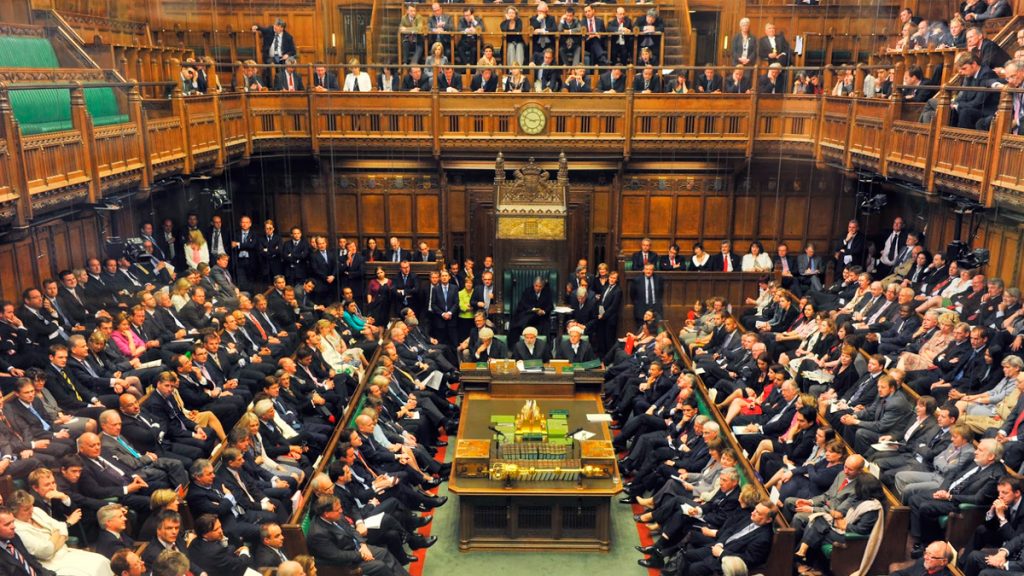
A modern Parliament
Westminster must become more effective in protecting citizens
and holding government to account. We will therefore improve the
procedures and facilities of the House of Commons, strengthen
scrutiny of EC legislation, and end ministerial misuse of the
Royal Prerogative.
We will give shareholders the right to vote upon all political
donations made by public companies, require donations to political
parties to be declared in a public register, require the accounts
of political parties to be published and, as recommended by the
Houghton Report, introduce state aid for political parties.
Further constitutional reforms will include those leading to the
replacement of the House of Lords with a new elected Second Chamber
which will have the power to delay, for the lifetime of a Parliament,
change to designated legislation reducing individual or constitutional
rights.
We will continue to encourage a wide and well-informed public
debate on the electoral system. The working party on electoral
systems which we established in opposition under the distinguished
chairmanship of Professor Raymond Plant will continue its work
with an extended membership and enhanced authority and report
to the next Labour government.
This general election was called only after months of on-again,
off-again dithering which damaged our economy and weakened our
democracy. No government with a majority should be allowed to
put the interests of party above country as the Conservatives
have done. Although an early election will sometimes be necessary,
we will introduce as a general rule a fixed parliamentary term.
It's a new chance to enhance peace in the world
Labour, which in opposition joined our NATO allies in rejecting
the Conservative government's cold war nostalgia, will in government
partner the United States in negotiating to reduce the world's
stocks of nuclear weapons. We shall seek to involve the four former
Soviet nuclear republics, together with France and China. Until
elimination of those stocks is achieved, Labour will retain Britain's
nuclear capability, with the number of warheads no greater than
the present total.
With the increase in major nuclear powers from five to eight,
proliferation is a dangerous reality and may become an even greater
threat to peace and stability. The Tory government contributed
to proliferation when it permitted the supply of nuclear weapons
material to Saddam Hussein. The Labour government will work in
the United Nations for a strengthened nuclear non-proliferation
treaty, backed by meaningful sanctions and by a comprehensive
nuclear test ban treaty. We will in addition work for a global
ban on chemical and biological weapons and stronger controls to
prevent proliferation of ballistic missiles. Meanwhile, we will
join Russia in ending nuclear tests.
We will actively support the peace-making role of the UN - for
example, in Cambodia and Somalia - and work for a permanent United
Nations peace-keeping force.
It's a new chance to solve long-running disputes
The Labour government will work in the United Nations and the
European Community to enhance peace prospects in the Middle East.
Our aims are security for Israel and self-determination for the
Palestinians. There must be strict control on arms sales to the
region.
Labour will work in the United Nations, the Commonwealth, the
European Community and NATO to help bring about the peaceful reunification
of Cyprus, on the federal basis advocated by the sovereign government
of Cyprus. The Labour government will make itself available to
our friends in India and Pakistan to assist in achieving a negotiated
solution to the problem of Kashmir that is acceptable to all the
people of Kashmir - Moslems, Hindus and Buddhists.
We will, as a matter of urgency, discuss with Hong Kong's representatives
what measures may best enhance democracy and confidence during
Britain's five remaining years of responsibility for the colony.
It's a new chance to provide genuine security for Britain
As the party which took Britain into NATO, Labour will base its
defence policies on UK membership of the alliance. We will provide
whatever resources are needed for effective defence for our country,
providing the necessary level of forces with the appropriate equipment
and weapons.
Unlike the Tories, we recognise that disarmament negotiations
and technological change can bring about problems for our defence
industries. Nearly 100,000 lobs have already been lost during
the past two years and 123,000 more are in danger.
Selling more arms to poor countries is not an acceptable or effective
way of maintaining Britain's defence industries. We will
stop sales to countries which might use them for internal repression
or international aggression.
The Labour government will set up a Defence Diversification Agency
to assist workers, communities and companies affected by change.
The agency will ensure that resources made available by reductions
in defence spending - reductions already planned by the Conservative
government - are used in the first instance for rebuilding and
investing in our manufacturing base. From the fruits of this investment
can stem finance for health and the social services.
It's a new chance for a new Europe
The Labour government will promote Britain out of the European
second division into which our country has been relegated by the
Tories. Our first chance will be the United Kingdom's six-months'
presidency of the Community, starting on 1 July. We shall use
that presidency to end the Tories' opt-out from the Social Chapter,
so that the British
people can benefit from European safeguards. We will also use
our presidency to help ensure that poorer countries are not disadvantaged
as a result of the Single Market.
We shall play an active part in negotiations on Economic and Monetary
Union. We shall fight for Britain's interests, working for Europe-wide
policies to fight unemployment and to enhance regional and structural
industrial policy. The elected finance ministers of the different
countries must become the effective political counterpart to the
central bank whose headquarters should be in Britain.
As part of the evolving role of the regions of Europe, we will
establish a Scottish representative office in Brussels and seek
appropriate representation for the Scottish Parliament in European
institutions. We shall seek fundamental changes in the wasteful
Common Agricultural Policy. Savings can help finance other Community
projects.
We shall make the widening of the Community a priority, and shall
advocate speedy admission for Austria, Sweden,
Finland and Cyprus, whose membership applications have been or
are about to be lodged. We shall seek to create conditions in
which, at the appropriate time, the new democracies of Central
and Eastern Europe can join the Community.
It's a new chance for human rights
Labour will set up a Human Rights Division in the Foreign and Commonwealth Office, and require all Britain's diplomatic posts abroad to appoint an officer to monitor human rights. There will be an annual report to Parliament. Decisions on economic aid and arms sales will be linked to human rights records.
It's a new chance to win friends abroad
Labour will end Tory government meddling in the valuable work of the British Council. Within carefully controlled costings, Labour will consider new scope for the BBC World Service, praised by listeners such as Terry Waite and Mikhail Gorbachev, and for the BBC's World Service Television Service.
It's a new chance to fight world hunger and poverty
Under the Tories, Britain's aid budget has been cut to its lowest
ever. The Labour government will aim to meet the United Nations
aid target of 0.7 per cent of GNP within five years - the lifetime
of a full Parliament. Labour will establish a separate Department
of State for International development, whose Minister will be
in the Cabinet.
Tackling poverty will be the top priority of our aid programme.
We will make aid more effective, work more closely with non-governmental
agencies, put women at the heart of our programme and, in co-ordination
with other donors, reduce the share of tied aid. Labour will promote
environmentally sustainable development and encourage new approaches
to reduce Third World debt. We will restore funding for development
education in the UK.
We will promote greater and fairer trade for poor countries, to
enable their economies to grow and diversify. UN and European
Community action to help the world's poor must become more effective.
Labour will take Britain back into UNESCO.
The Labour government will work within the G7 and the European
Community to win support for a New Marshall Plan to assist the
former communist countries of Central and Eastern Europe and of
the ex-Soviet Union. Instability in those countries, caused by
shortages and discontent, could be as great a threat to world
peace as the armed communism that has now disappeared.
It's a new chance for Britain in the Commonwealth
The Tories have regarded the Commonwealth as a wearisome obligation. Labour believes that this unique inter-racial and inter-hemispheric organization can play a central role in fighting racism, hunger and human rights violations. We shall play an active part in the Commonwealth and join the South Africa Committee of Foreign Ministers which the Tories have boycotted.
It's a new chance to safeguard the environment
The Tories have been laggardly and reluctant in international
moves to protect our planet's environment. Labour will set the
pace in pressing for international action to safeguard the ozone
layer, to combat acid rain, to tackle the problem of global warming,
to face up to the environmental needs of the poorest people of
the world. We will scrap the Tory government's opt-out on European
Community environmental protection measures and deadlines. Labour
will adamantly oppose any attempts to permit commercial exploitation
of the virgin continent of Antarctica.