|
|
IT'S
WORKING - LET'S KEEP BUILDING
SDLP WESTMINSTER MANIFESTO 2001
Introduction
In recent years this island has begun
to glimpse a brighter future – a dramatic reduction in
violence, increasing growth in our economy; the
development of all-island co-operation; power transferred
to our own representatives to run our affairs and
unemployment at its lowest level for 25 years. This
progress has only been possible as a result of the Good
Friday Agreement.
The SDLP set out to build a new Ireland
based on human rights, partnership and respect for all
traditions; we have delivered our core goals of
power-sharing in the North, strong all-Ireland bodies as
part of a far-reaching North-South agenda and good working
relations with Britain. We are proud of the fact that
these are central elements of the Good Friday Agreement.
With your continued support we can now make greater
progress in rebuilding this society and this economy. In
this respect our core aims are the elimination of poverty
and unemployment through the development of a high-wage,
high-skill, socially just economy, supported by
well-funded and efficient public services. We have
delivered the peace. Now we are delivering progress and
prosperity.
Where it Counts, When it Counts
We are working to unite the people of
Ireland through the development of agreed political
structures which can provide a framework for a healing
process between our divided people. The SDLP believes the
full implementation of the Good Friday Agreement presents
our best opportunity to do that. We are working where it
counts, when it counts on the issues that count. The SDLP
is operating every aspect of the Agreement to the
advantage of the whole community. Our party is the only
one in the Executive playing a full and constructive role
and adhering to all the requirements of the Agreement.
Long-standing SDLP policies are reflected throughout the
Programme for Government. In the North-South Ministerial
Council, we are working to establish new partnerships that
can deliver benefits for the whole island.
Delivering at Westminster
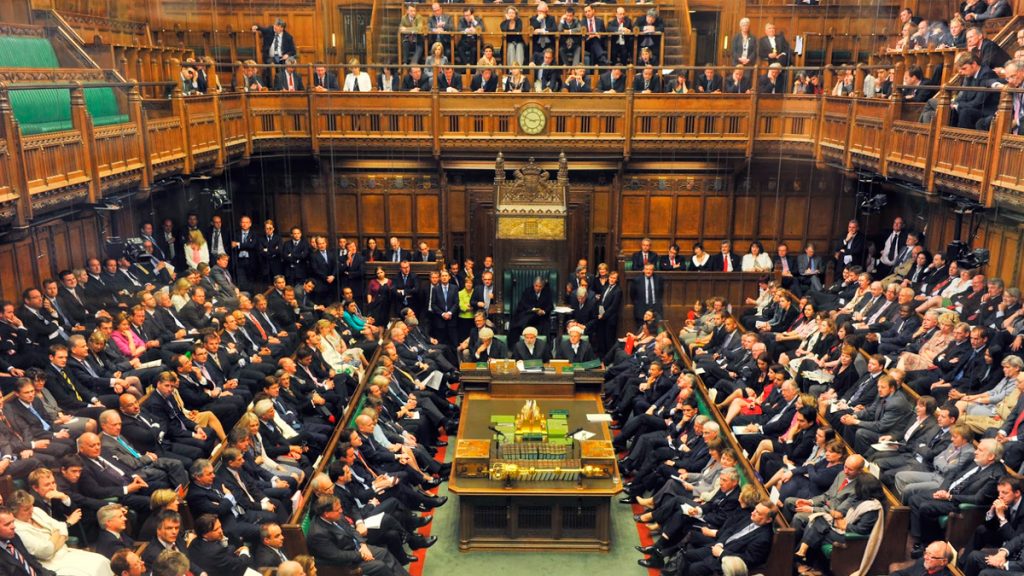
In the House of Commons the SDLP
defends the rights and needs of the people of Northern
Ireland across the range of matters not yet devolved to
our new institutions. This is how we secured key
improvements to the Police Bill, laying down over 100
amendments to the legislation and making the case for
change on the floor of the House of Commons. The following
key issues will be debated at Westminster during the next
parliament. The SDLP will be there to represent your
views.
- Justice Review
- Bill of Rights
- Funding for Northern Ireland
|
- Drugs policy
- Fiscal autonomy for the Assembly
- Entry to Single European Currency
|
Delivering partnership politics in Local Government
Since the 1970s, the SDLP has led the
way by initiating power-sharing arrangements at Council
level. Following the Agreement, this partnership approach
is now reflected in the voting arrangements for the
Assembly. We are continuing our work to build new and
stronger partnerships in local communities, giving
effective representation and comprehensive constituency
advice service. SDLP Councillors are working to create
jobs, improve services and secure better facilities
especially in areas of social and economic need. They have
also worked to build all-island partnerships through
establishing cross-border relations with neighbouring
Councils.
This manifesto is designed to inform
you about the policies of the SDLP and about the kind of
society we want to build. This is our vision. Vote for the
SDLP and make it a reality.
Contents
I.
Economic Development
Creating Jobs & Securing Investment
p. 3
Promoting the Rural Economy p. 4
Budgeting for success p. 5
Building skills: higher & further
education and training p. 6
Building capacity: developing
infrastructure p. 7
Protecting our Natural Resources p. 8
Public Administration p. 8
II. Social Development
Education p. 9
Health p. 9
Housing p. 11
Social Security p. 11
Culture and Sport p. 12
III.
Equality, Human Rights & Reconciliation
Equality and Targeting Social Need p.
13
Human Rights p. 15
Victims of the conflict & community
relations p. 15
IV. Justice and Policing p.
16
V. EU and International Relations
p. 17
I. Economic Development
The
political progress of recent years has already brought
significant economic benefits for Northern Ireland. At
5.1%, unemployment is at its lowest for 25 years - and
well below the EU average, while investment has increased
by almost 40% since 1998. The SDLP has been at the
forefront of efforts to bring new industries to the North,
using its international connections to rebuild our economy
rather than to fill party coffers. However, much remains
to be done. Globalisation and the advent of new
technologies have transformed the working world; the new
economy will depend on knowledge, skills, innovation,
enterprise and, crucially, people.
Securing Investment & Creating Jobs
A core aim of the SDLP is to achieve a
high standard of living for all in society, through the
sustainable development of a high-skill, high-wage,
socially just economy. The SDLP is committed to the social
partnership model of employment and we welcome recent
improvements in workers’ rights legislation. It is a key
objective of the SDLP to ensure a fair geographical spread
of employment opportunities throughout Northern Ireland.
In Westminster we will work to achieve:
- entry into the single European currency
- an increase in the minimum wage to £5 per hour in the
context of an improved minimum income guarantee
SDLP priorities in the Assembly:
- maximise North-South co-operation in job creation and
economic development: co-operation of economic support
agencies to create a stronger marketing organisation for
the island; development of all-Ireland investment
strategy; maximise the role and potential of Inter-Trade
Ireland
- movement from low-tech industries into hi-tech
developments including increased investment in Research
and Development. The creation of a new Technology
Commission could prove useful in identifying
opportunities in software, electronics, information
technology and communications
- better targeting of investment and support in areas of
social and economic need;
- maximise the potential of the North-South body on
Tourism to expand the industry
- strongly encourage the Dublin government to invest
more in border areas
- investment in Research and Development including the
establishment of an effective bio-technology strategy to
explore potential in a rapidly developing sector
- Green Economy Task-Force should be created to make
local businesses fully aware of the economic and
environmental costs of their actions, to illustrate the
potential savings from the more efficient use of
resources and the reduction of waste, and to show the
potential of new markets for environmentally-friendly
products
At Local Government level we will:
- work in partnership with employers to create jobs in
all parts of Northern Ireland.
Promoting the Rural Economy
The SDLP is working in partnership with
rural communities to remedy the serious problems faced by
the agricultural industry. We recognise the significant
decline in incomes suffered by farming families and the
impact this has had on rural life and on the economy as a
whole. However, the SDLP firmly believes that through
creative policies, developing export markets, utilising
new technologies and examining opportunities for
diversification, we can revitalise the rural economy. This
will require co-operation between government departments
and innovative approaches to education and training,
regional development infrastructure and the provision of
public services.
Having SDLP Ministers in government has
already made a real difference:-
agriculture
budget up nearly 10% (total £190 million);
after 30 years of neglect, the small farmer has
finally been recognised with allocation of milk quota on
a targeted basis to smaller dairy producers;
24,000 new training places for farmers;
joint animal health strategies with the South being
prepared to tackle animal disease on an all-Ireland
basis;
persuaded UK Govt to draw down agri-monetary
compensation to protect farmers from impact of UK
opt-out of Euro;
acted swiftly and decisively to curb the outbreak of
Foot and Mouth
In Westminster and in Europe we will:
- work to achieve low-incidence BSE status so that
Northern Ireland is distinguished from the UK in its
dealings with the EU
- support a vigorous European Marketing campaign for our
agricultural produce;
- protect the particular interests of Northern Ireland
farmers in the review of the Common Agricultural Policy
(CAP);
- maintain pressure on the British government to draw
down all agri-monetary funding
In the Assembly we will work to:
- redress the damage of thirty years of direct rule by
promoting social and economic regeneration of our
disadvantaged rural communities through a policy of
sustainable development;
- support "rural-proofing" of all government
policies to check that farming communities are not
disadvantaged;
- work towards restructuring of the agricultural
industry including development of an early retirement
scheme for farmers;
- promote organic farming with due regard for the costs
associated;
- work to develop stronger links between rural
development and tourism and maximise potential benefits
of the ‘Leader’ programme;
- develop better all-Ireland co-operation on all
agriculture and rural development issues, and in
particular on an all-Ireland FMD recovery strategy.
In local government we will:
- work to support rural communities in the development
of services and opportunities
Budgeting for Success
The SDLP is pledged to ensure good
management of public funds without losing sight of social
democratic principles. We are committed to the development
of effective and well-resourced public services as a
foundation of a growing economy and a thriving society. In
practice this means the SDLP is committed to using public
money in pursuit of social democratic and equality-driven
goals, to deliver, for example, extra resources to health,
education, regional development and other public services.
We believe that direct and graded taxation must remain the
primary method of funding such services but we are
prepared to be creative about generating additional
financial support on the condition that public benefit can
be guaranteed in terms of transparency, accountability,
and value for money.
Already Northern Ireland has benefited
enormously from having an SDLP Finance Minister:
driven
the creation of Executive Programme Funds to support
children in need, community regeneration, investment in
public services and infrastructure and economic
innovation; also launched review of deprivation indicators
to inform policy development and support targeting social
need;
worked to secure in excess of £1 billion in European
funding including Peace 11 and the Building Sustainable
Prosperity Programme
initiated Senior Civil Service Review to address
under-representation of certain groups in society
including women, Catholics and minority ethnic groups
accommodation Review initiated to examine government
needs and scope for decentralisation;
delivered a budget agreed by all Ministers;
provided and promoted funding of free public transport
for pensioners.
In Westminster we will work for:
- an increase in resources allocated to Northern Ireland
on the basis that the Barnett formula unfairly
disadvantages this region;
- fiscal discretion for Northern Ireland to
ensure the tax regime is consistent with our needs;
- a reduction in corporation tax to enhance
international investment in the North of Ireland.
In the Assembly we will work to:
- build on the findings of the current reviews to ensure
efficient and well-informed management of the public
purse, to protect the vulnerable, reach out to the
marginalised, and underpin the economic foundations of
the new beginning;
- decentralise government functions to ensure that they
are more equitably spread across the North;
- monitor the Senior Civil Service Review and push for
the rapid implementation of policies to deliver equal
participation in all ranks of the civil service by all
groups in society;
- ensure that public procurement of goods and services
is based on sound criteria to ensure value for money as
well as promoting government policy such as, equality
issues, targeting social need;
Increasing skills: Further & Higher Education &
Training
The nature and quality of third level
education and training offered to learners of all ages,
will determine to a large extent the shape of our economy
in years to come. It will therefore have tremendous
implications for the level of unemployment and the
associated problems of poverty, health and crime. SDLP
policies are now delivering extra resources to FE Colleges
to address years of under-funding. We are working to build
parity of esteem for ‘vocational’ and ‘academic’
training.
The SDLP is committed to targeting
"at risk" groups such as the long-term
unemployed and people with disabilities, to assist them to
avail of training opportunities. We believe the focus of
efforts to tackle unemployment, such as New Deal, must
centre on the provision of individual support as well as
training to enable people to acquire the skills and the
confidence to enter the job-market, with greater
opportunities and choices.
Already the North has seen the
benefits of having SDLP Ministers in power:
- £65 million delivered for student financial support
in further and higher education; resources targeted at
those most in need so that fewer students pay tuition
fees and grants have been re-introduced for those from
lower income families;
- £3.7 million delivered to Further Education
Colleges; fees abolished for a range of FE courses;
- commitment given to create 5400 additional student
places by 2005;
- launch of Taskforce on Employability and Long-term
Unemployment.
The SDLP will work at Westminster to:
- secure additional funding to raise further the level
of student financial support available
- ensure that New Deal works to address needs of the
community in Northern Ireland
The SDLP will work in the Assembly to:
- advance the lifelong learning initiative through
greater support for adults returning to education and
flexibility in access to degree courses
- provide new training opportunities to address the
serious numeracy and literacy problems affecting one in
four of the population in the North
- ensure the financial independence of all young adults
in full-time education or training while targeting
available resources at those most in need; in
particular, mature students, people with disabilities,
those from lower-income backgrounds
- address skills shortages and enhance partnership
between educational institutions and business sector,
review training needs to ensure that courses are
stimulating and relevant, enhancing employability and
personal development
- introduce foundation degrees, improve access
opportunities and meet skills needs
- promote North-South co-operation in employment and
learning including cross-border student and lecturer
exchanges and cross-border advertisements.
At Local Government level, the SDLP
will work to:
- build relationships between Further Education
Colleges, local businesses and Councils to enhance
community development.
Building Capacity: developing infrastructure
Regional development strategy is
fundamental to the establishment of a new society in the
North of Ireland. Our transport, energy, water and
sewerage systems require long-term investment and planning
to reverse years of decay and to lay a foundation for
growth. Since its foundation, Northern Ireland has
experienced uneven social and economic development, which
contributed to the social and political upheaval of the
past.
The SDLP is working to achieve social
inclusion and economic growth through balanced and
sustainable regional development, determined strategically
with reference to an all-Ireland and European context,
addressing both the needs of urban and rural communities
and taking into account environmental and quality of life
issues. This means in practice that everyone should have
fair and ready access to services, jobs, hospitals,
housing and public transport. The
SDLP s led the way in prominent campaigning on these vital
issues, for e
The SDLP has been working to achieve free public
transport for pensioners since 1977: SDLP Annual
Conference – Motion 119 "Conference demands that
senior citizens be granted unconditional free transport,
free television licences and free electricity."
Consistent campaigning by the SDLP on the need for an
improved rail service has contributed to the ongoing
railway taskforce review.
The SDLP priorities in this area are:
an all-island strategic development framework - joint
infrastructural development schemes in border zones to
enhance social and economic welfare for people on both
sides of the border
the creation of an all-island energy market to achieve
economies of scale and competitiveness, and the
extension of natural gas throughout Northern Ireland
comprehensive regional development strategy to include
provision for the expansion of the physical
infrastructure of the ICT sector, including broadband
and ISDN, to enable companies to compete in the modern
economy
decisive action on the future of the Ports; land
around Belfast port should be used for economic
regeneration
creation of serviced space for quality investment
including hi-tech business parks
major investment in upgrade of water and sewerage
systems.
On regional transport strategy, the
SDLP prioritises:
- social inclusion and choice for customers and users in
urban and rural settings
- reduction in travel-to-work congestion
- upgrading and development of existing railway
provision consistent with highest safety standards and
implementation of proposals for light-rail solution for
Belfast ("BART")
- additional investment in roads and public transport
where rail services do not exist
- substantially increased investment in public transport
on an ongoing basis to provide a key element in
regenerating our economy.
Protecting our Natural Resources
Crucial to our existence, is the
protection of our natural environment, to ensure that we
hand on to future generations the clean air, pure water
and healthy plant and animal life on which their own lives
will depend. Sustainable development, the protection of
bio-diversity and European/international co-operation, are
at the heart of SDLP environmental policy.
SDLP priorities on the environment:
- Sustainable Development: We will lobby for the
setting up of an independent Environmental Protection
Agency to act as a watchdog and advise on public
interest.
- Planning:
We will put pressure on government to
accelerate the publication of local Area Plans and examine
these to assess whether they have been adequately co-ordinated
on various levels: across Councils boundaries, between
Councils and other strategies, e.g. economic development
and on a North-South basis.
- Protection of the Countryside:
The SDLP will work
in the Assembly to secure the early publication of a
government implementation programme and timetable for the
Biodiversity proposals released June 99. We will campaign
for a three-year action programme to improve waterways and
water quality and to reduce air emissions to meet Kyoto
targets. The SDLP supports the "polluter pays"
principle. We will lobby for the introduction of an
Educational Programme on Environmental Protection and we
will campaign to expand our native woodland. We will
oppose the introduction of GM items to the food chain
without proper testing.
- Waste Management:
The SDLP will work towards
reduction of waste as a priority followed by re-use,
recycling and energy recovery in order of preference. We
will work to secure increased targets for recycling waste
and enhanced effort to find and generate markets for
recycled goods, including a public awareness campaign. We
would support the introduction of a packaging tax to
reduce waste.
- Environment & Heritage:
We will lobby for
co-operation between DETI and DOE and Environmental
departments to ensure the development of an improved
habitat protection scheme.
- Road Safety:
The SDLP seeks the adoption of an
action plan to tackle road deaths, involving education,
road safety measures and law enforcement.
In Local Government we will work to:
- protect natural habitats, conserve resources,
encourage recycling and promote awareness;
- promote co-ordinated approach to maintenance and
development of recreational areas, greenspace, public
pathways and conservation areas;
Public Administration
The SDLP has not just changed the form of government
but the face of government also. We pioneered partnership
government; we drove the reorganisation of government
departments to make them more coherent; now we are
promoting partnership between government and other
interests as we promoted the social partnership model for
the delivery of European funding.
The SDLP has voiced concerns over many years about the
structure and operation of the "quangos" which
administer a very significant proportion of the budget for
the North. The forthcoming review of public administration
will address these issues as well as the structure and
function of local government. The SDLP will campaign on
the basis of key principles of – equality, openness,
accountability, efficiency, cross-community involvement
and ‘subsidiarity’ (keeping government close to the
people).
II. Social Development
Education
Education is a cornerstone of our
society; it is a key driver of the economy as well as a
fundamental human right. The SDLP wants to see children
and young people taught and cared for in a way that:
- encourages them to develop their full potential in
terms of creative, vocational, academic, sporting or
other skills, and to cope with whatever difficulties
they may have or encounter
prepares
young people to play a full role in society as
responsible, confident citizens aware of their own and
others’ rights and responsibilities
equips students with the skills necessary to gain
employment and live as independently as possible.
SDLP priorities on education:
- equality of opportunity, parental and student choice,
social inclusion and parity of esteem between ‘academic’
and ‘vocational’ education;
- provision of fully-funded pre-school places for all
children;
- to contribute to the curriculum review, encouraging
for example, consideration of the benefits of early
second-language learning and prolonged ‘informal
learning’ (learning through play);
- the end of selection at eleven and the introduction of
all-ability co-educational education within the sector
of choice (controlled, maintained, integrated or
Irish-language);
- widening curriculum options in all-ability schools to
include "vocational" subjects from age 14;
- to support initiatives that will broaden the post-16
curriculum to maintain the widest number of career
options for young people;
- investment in school buildings to eliminate use of
mobile classrooms;
- promote inclusion in mainstream education of those
with physical or learning difficulties;
- fair and equitable funding for all schools while
actively targeting social need;
- development of ICT facilities and skills in all
schools;
- supporting the right of auxiliary staff to full-time
contracts based on the calendar year.
At Local Government level we will:
- work to build partnerships with schools to maximise
the supervised use of school facilities for the benefit
of the community.
Health, Social Services & Public
Safety
Statistics consistently show that
Northern Ireland has a very poor record in terms of the
health of the population – high rates for coronary heart
disease, cancer and mental health problems. Health
standards are well below the European average on these and
many other comparitors. The SDLP has campaigned to draw
attention to the links between health and poverty,
education and employment. We want to see an integrated
strategy linking all relevant departments in a concerted
attempt to improve the health of all, with increased
emphasis on prevention. Although funding is clearly a
central issue, the SDLP will work to highlight the need
for better management of existing resources.
SDLP priorities on health:
- Primary care: the replacement of GP fund-holding
as soon as possible with an accountable, efficient and
modernised system, guaranteeing fair distribution of
resources and enhanced partnerships between medical
professionals and user representatives. Greater
resources should be invested to deliver a primary-care
led health service and reduce numbers requiring
secondary health care.
- Health Administration
: a reduction in tiers of
management in the health service and greater co-ordination
between health and other administrative boundaries eg.
Council boundaries.
- Staff and skills shortages
: increased numbers of
doctors and nurses and greater numbers of other specialist
staff to address shortages, e.g. occupational therapists,
theatre nurses.
- Acute Hospitals
: decisions on acute hospital
provision based on principles of accessibility, safety and
fairness which address the needs of rural communities.
- Public Health
: greater co-operation between
departments to secure greater awareness-raising and more
spending on preventative action;
- Children’s services
: rapid implementation of the
Assembly Health Committee’s report on Residential Care
for Children. There is a shortage of places for children
who require care and an inappropriate situation where
children in need of psychiatric help are placed in adult
wards. Children currently in care or who have spent time
in care, require greater support during childhood and in
making the transition to independent adult life.
- Long-term care for the Elderly
: to lobby for the
implementation of the Royal Commission’s proposals to
guarantee treatment to older people on the basis of need.
- North-South Co-operation
: the SDLP will work to
advance the "Co-operation and Working Together"
(CAWT) initiative promoting cross-border links and sharing
resources in the interests of efficient, high-quality
patient care.
- Ambulance Service
: investment is urgently
required; additional resources could reap significant
benefits, given technological advances and in the context
of a rural population.
- Mental Health
: greater public awareness of mental
health issues is essential and would lead to earlier
diagnosis and treatment would help address the
consequential social problems that often arise. Extra
capital funding is required to improve standards in
residential care settings; and an information campaign
should be undertaken. Rising suicide rates reflect these
concerns. The SDLP will campaign for a co-ordinated
approach between relevant services, to tackle youth
suicide and para-suicidal behaviour.
- Cancer Services
: action is required to improve
co-ordination as services are transferred from Belvoir
Hospital to Belfast City Hospital. Greater numbers of
skilled staff are required
- Support for Carers
: unpaid carers in society
subsidise the health service and should be given greater
financial and medical support.
- Drugs
: the SDLP is working to advance the agenda
of the inter-departmental working group on drugs and
supports a constructive, holistic approach to the drugs
problem to address the range of background issues
associated with drug abuse.
At Local Government level we will:
- defend the right of communities in every area to
quality, accessible health and social care.
Housing & Community Development
Since its formation, the SDLP has
campaigned for adequate housing for all as a fundamental
human right. We believe that there continues to be a need
for publicly owned and maintained housing stock. As soon
as the Assembly was created we began a campaign to
highlight the inadequacy and unfitness of housing in some
areas, the lack of affordable housing in Belfast and the
need for more co-ordinated urban planning in areas of new
development.
The SDLP is working to:
- increase the budget to ensure an ongoing "new
build" role for the Housing Executive, in providing
quality, affordable public housing;
- win support for a wide-ranging review of the
arrangements under which the Housing Associations
operate in connection with public housing including
cost, availability and standards of maintenance;
- address the problem of homelessness and examine
resource allocation to guarantee adequate temporary
housing;
- tackle housing unfitness including connection of all
(600) remaining homes to the public water supply;
- urge the Department to learn from the experiences in
the Republic and from initiatives as regards building
affordable housing, before Belfast meets the problems
encountered by Dublin and London;
- secure an increased proportion of urban regeneration
on "brownfield" sites
- demand close co-operation between the Departments of
Social Development and Regional Development to ensure
that infrastructural preparation in terms of roads,
water and power, is co-ordinated with housing
development, commercial development, recreational
facilities and the creation of green space;
- return sites used as military bases to local councils,
to be redeveloped for public benefit.
At local government level we will:
- examine potential of Belfast Laganside re-development
to inform other regeneration projects;
- work to maximise advantage of EU funds and government
initiatives in the drive to build our economy;
- continue to provide quality advice on housing issues,
to support people & develop communities
Social Security
The SDLP believes that people have the
right to a decent standard of financial support if, for
whatever reason, they are unable to provide for their
needs independently. Claimants are entitled to an
efficient service and to be treated with dignity and
respect. We support the concept of a minimum income
guarantee but do not accept that current benefit levels
are adequate. The UK Treasury sets spending on social
security benefits, at levels which are lower than the
European average. The social security system is
bureaucratic, complex and expensive to administer. Under
UK governments of the last twenty years, poverty and
inequality have increased more than in any other EU
country. Clearly, benefits issues must be linked to
policies and programmes aimed at assisting people to gain
employment or develop the skills necessary to live as
independently as possible.
In Westminster we will work towards:
- an overhaul of the benefits system to produce a more
streamlined and user-friendly system;
- an increase in the level of income support and
unemployment benefit;
- a comprehensive disability income scheme;
- an end to the restrictive points system used in
assessing Incapacity Benefit;
- the restoration of the link between the basic pension,
inflation and average earnings;
- the replacement of the social fund with a system of
grants as a legal right linked to an appeals system with
discretionary grants for emergencies;
- ending injustice such as age discrimination in the
benefits system.
In the Assembly we will work to:
- ensure that there are adequate numbers of trained
advisers and that every applicant is allocated a named
adviser so that once in contact with the system all
relevant benefits will be obtained;
- establish a new benefits uptake campaign.
At local Government level we will:
- advise constituents and assist them to secure the
benefits to which they are entitled;
- encourage uptake of benefits available.
Culture and Sport
The SDLP views culture, arts and
leisure issues as central elements in our society, capable
of enriching our lives, assisting personal development and
promoting debate and social inclusion. For this reason and
given the impact these industries have on the economy,
government should be supportive and innovative, but not
prescriptive.
While rejecting provocative flag-waving
or tribalism, the SDLP has articulated a desire felt by
many to share in the cultural life of the Irish nation; we
wish to celebrate and preserve the rich diversity of our
cultural heritage and believe the new all-Ireland language
body can play a key part in that. Culture and identity
issues have been central elements in the conflict;
nevertheless we believe that they can also be a vehicle
for reconciliation.
In Westminster we will lobby for:
- a tax-exemption scheme for artists and sportspersons
similar to that operating in the Republic;
- the introduction of expanded range of tax incentives
to encourage private sector contributions towards
funding of Culture, Arts and Leisure projects
- support for SDLP proposals that public buildings would
display the symbols flags and emblems should displayed
only by agreement so that of both or neither tradition
or, as a third option, new agreed symbols.
In the Assembly we will work towards:
- special recognition and an enhanced role for the Irish
language in public life;
- development of a cultural heritage programme in
schools involving indigenous languages, literature and
music;
- support for the development of a Northern Ireland
Theatre Company;
- cash injection to support development of local film
industry; upgrade of facilities and re-branding for
Northern Ireland Film Commission;
- recognition and treatment of sport as a central
element in cultural development and a significant sector
of the economy; the development of purpose-built motor
racing tracks to reduce risk associated with the sport;
- the development of all-island arts, culture and
leisure policies;
- enhanced regional autonomy for BBC Northern Ireland,
to facilitate development of local writing and
production, including Irish language and Ulster-Scots
productions; all-island coverage of RTE television;
- establishment of a Northern Ireland Cultural and
Historical Archive.
At local government level we will:
- work to promote respect for all cultures in Northern
Ireland and support initiatives to create symbols and
representations of what the communities have in common;
- encourage the use of recreational facilities
especially in areas of social and economic need
- support the development of arts in the community with
greater artistic autonomy
III. Equality, Human Rights and
Reconciliation
Equality
The creation of a fairer, more equal
society is core principle underlying all areas of SDLP
work. We are committed to the creation of a pluralist
democracy that respects and cherishes all traditions and
cultures. The SDLP works hard to ensure that the equality
agenda is taken forward in a positive way so that every
community in the North can benefit and feel ownership of
it. We believe that with rights come responsibilities -
this is particularly important in balancing competing
rights. Creating equality of opportunity does not mean
treating everyone in the same way. Neither is it enough to
tackle discrimination; to build a fairer society we must
actively target social need, giving extra support to those
who need it most.
The SDLP’s commitment to equality is
already being reflected in government:
- Single Equality Bill to extend protection from
discrimination to new categories including age and
sexual orientation and ‘harmonise upwards’ as far as
practicable existing protection against racial,
religious, sex or disability discrimination;
- Children’s Commissioner and strategy for children as
well as the creation of a "Children’s Fund"
for young people at risk and children in need
- extra funding for the Equality Commission to enforce
disability rights;
- funding to support ethnic minority voluntary groups;
- funding for pilot traveller accommodation.
At Westminster we will work towards:
- the extension of the obligation to carry out equality
impact assessments to all UK bodies whose work affects
equality of opportunity in Northern Ireland;
- new legislation for Northern Ireland to introduce
offences of racial violence and harassment;
- a radical overhaul of sex offences legislation in
Northern Ireland;
- the repeal of laws banning Irish nationals from
holding key civil service posts.
In the Assembly we will work to:
- enforce and monitor the implementation of the
"equality duty" by government departments so
that all government policies are scrutinised for their
impact on equality of opportunity;
- ensure the implementation of the Disability Rights
Taskforce report;
- secure a strong remit and adequate resources for a
Children’s Commissioner as part of an overall strategy
for children;
- ensure that the voice of children is heard in
government and to promote the need for a strengthened
Protection of Children Act for Northern Ireland with
compulsory vetting of employees for all organisations
working with children, and vetting information provided
free of charge for all organisations;
- enhance North-South co-operation on the protection of
human rights and equality of opportunity;
- introduce equal pay audits and measures to promote
equality of opportunity for women as part of the Single
Equality Bill.
At Local Government level we will work
to:
- promote equality and oppose discrimination on grounds
of gender, race, disability, sexuality, age, religion or
politics.
Targeting Social Need
The SDLP will continue to promote
targeting social need throughout the administration as an
important tool for creating equality of opportunity across
Northern Ireland and breaking the cycle of deprivation. We
will also work to promote social inclusion of all groups
in our society. Indeed SDLP Ministers have already proven
this commitment in their short period in office. Bríd
Rodgers took the radical step of distributing milk quota
only among small farmers. Seán Farren targeted additional
finance at lower income families and Mark Durkan has
driven the creation of the Executive Programme Funds
designed to tackle poverty and disadvantage.
Major differences remain across many
indicators from health to unemployment between different
groupings in our society. Despite reductions in income
differentials between men and women, there is still a 20%
gap in average earnings. Although unemployment has fallen
in both communities, Catholics remain significantly more
likely to be unemployed – a problem that must be
tackled. Minority ethnic communities, people with
disabilities and older people all face considerable
disadvantage in society. Inequality of opportunity is an
unacceptable waste of talent as well as an injustice.
The SDLP will work for:
- affirmative action and target-setting to promote
equality of economic opportunity;
- greater investment in our most deprived areas;
- the development of action plans to tackle urban and
rural unemployment;
- the use of procurement to encourage recruitment from
the long-term unemployed;
- extra funding for schools in deprived areas;
- additional funding for quality, affordable childcare
for all;
- proper accommodation to meet the needs of the
Travelling community.
At Local Government level we will work
to:
- provide safe and supervised recreational facilities,
particularly in areas of social and economic need;
- ensure development of effective targeting social need
action plans by all local authorities.
Human Rights
The SDLP was formed to construct a new
political framework, a new Ireland built on a solid
foundation of human rights principles, which would support
new institutions and attract the allegiance of all
sections of the community. With the signing of the Good
Friday Agreement, our work to promote human rights has
advanced enormously, but is by no means completed.
Progress has been made in implementing many of the human
rights commitments in the Agreement, but others are still
in the early stages of development. Central to the Good
Friday Agreement was a commitment to produce a Bill of
Rights, proposals for which are currently being considered
by the Human Rights Commission.
The SDLP is working to ensure that the
new Bill of Rights will:
- protect all rights set out in the Agreement but not
included in the European Convention of Human Rights,
such as the right to parity of esteem and just and equal
treatment for the identity, ethos and aspirations of the
two main communities in Northern Ireland;
- be broad-ranging and progressive and that, as well as
civil and political rights, it will protect and promote
social and economic rights e.g. the right to shelter and
the right to education;
- be based on best international practice, guaranteeing
rights protection second to none;
- be protected by a new human rights court, presided
over by specially trained judges.
The SDLP has welcomed the establishment
of the Human Rights Commissions North and South, although
we remain concerned about the under-funding of the
northern commission and the inadequacy of its powers of
investigation. We will work to remedy these problems and
to encourage and facilitate close co-operation to provide
all-island rights protection.
Victims of the Conflict & Community
Relations
The SDLP recognises the need to address the needs of
the victims and survivors of the conflict. We come to this
issue in a spirit of reconciliation and are working to
address it in a constructive and progressive manner. We
are conscious of the need not to increase tensions, not to
encourage arguments about the "real victims" but
to give practical support and to promote healing and
mutual understanding, without forcing the issue of
reconciliation prematurely.
The SDLP has already ensured a
fundamental review of our community relations policy, to
ensure that it is focused on areas of greatest need and
works in partnership with local communities.
The SDLP is campaigning for:
- adequate financial and practical support for those
injured during the conflict and for bereaved families;
- a public memorial incorporating an inter-active video
archive of victims’ testimony;
- a register of victims to be held by the Office of the
First and Deputy First Minister, to which anyone could
submit their name for inclusion;
- the appointment of a victims’ advocate to monitor
the provision of services for victims and make
representations on their behalf.
IV. Justice & Policing
Policing
The SDLP looks forward to supporting a
new police service with which all sections of the
community can identify. To do that we are seeking
reassurance that the "new beginning" defined by
the Patten Report, will be realised. While we accept that
the ideal police service will not be created overnight,
nevertheless there are certain minimum standards relating
to structure, membership and accountability that are
required if the new beginning is to be secured.
We must be sure that any wrong-doing
would be effectively addressed; we must be sure that the
service will quickly have significant numbers of
nationalists, women and other under-represented groups and
we must be sure that the structures will balance the
political decision-making role of elected representatives
against the "operational responsibility" of the
Chief Constable. If these concerns are not adequately
addressed now, there will be little appetite for reform in
five years when it becomes clear that the same problems
remain.
The SDLP has consistently acknowledged
the difficult role performed by police officers over the
years and the terrible suffering endured by officers and
their families. However, for many years we have pointed
out that the RUC has never had significant numbers of
nationalists within it, even prior to the outbreak of the
recent conflict. We have highlighted many instances of
wrong-doing that were not addressed. We must create the
new beginning so that the police service becomes the
impartial defender of the public, accountable to society,
representative of those it serves, removed from political
debate and respected by all.
The SDLP is working to secure:
- full implementation of the Patten report – we
proposed over 100 amendments to the legislation and will
keep working to secure changes to policing legislation
to reflect these requirements;
- phasing out of the full-time reserve, the immediate
closure of Gough Barracks, lateral entry of gardai into
the new service; improvements in police training on
human rights; withdrawal from use of plastic bullets;
thorough reform of Special Branch;
- public inquiries into a number of controversial
murders which have come to represent the core of
nationalist distrust in the security forces and justice
system.
Justice
The SDLP has maintained since its
inception that a new society could only be built on a
foundation of justice and equality. While we acknowledge
that difficult circumstances prevailed over many years,
the SDLP believes nonetheless that essential principles of
policy and practice were breached including legal
safeguards on the admissibility of evidence, treatment of
those in custody, the right to a fair trial and
differential treatment of those alleged to have committed
offences. Having campaigned for the reform of the justice
system for many years, we worked to have such reform
included in the Good Friday Agreement and made a detailed
submission to the Review.
Our priorities for reform of the
justice system are:
- abolition of Diplock Courts;
- reform of judicial appointments procedure so that the
judiciary reflects the society it works to protect;
- adherence to international obligations and standards;
- creation of an independent prosecutor’s office;
- abolition of emergency laws;
- funding for alternative secure accommodation to ensure
that no under 18’s go to prison;
- the piloting of community restorative justice in an
accountable, human-rights based structure, organised,
accredited and monitored by the Probation Board,
formally linked to the justice system and managed
consistent with best practice models internationally.
The SDLP has always opposed violence
and abhors the ongoing occurrence of punishment beatings.
No group can assume the authority to assault individuals
in this manner. We remain confident that the reform of
policing and justice will contribute to a resolution of
this problem.
Our party is working for the full
implementation of the Agreement, including the outstanding
issues such as decommissioning, demilitarisation and
policing. There is no place in a democracy for illegal
weapons and the mechanisms arising from the Agreement must
be exhausted to ensure that such weapons are put
verifiably beyond use.
We are continuing to press the British
government to speed up the normalisation process and
rebuild trust in our community. These issues have divided
our society for too long and must be addressed if we are
to create a healthy democracy at peace with itself and its
neighbours.
V. EU and International Affairs
The European Union
The SDLP has long been a pro-active and
supportive advocate of membership of the European Union
and is the only party in Northern Ireland to adopt such an
approach. Indeed we were the first party in Ireland to
press for membership of the EEC as it was in the 1970s.
The EU has made a great contribution to Ireland,
especially to Northern Ireland. EU regional and social
policies have delivered millions of pounds of funding for
economic and educational initiatives. Above all, the EU
has been invaluable in our search for peace. By
encouraging people to work together in pursuit in common
interests, while preserving their separate identities, the
EU transformed post-war attitudes created genuine
partnerships. And the EU has provided much needed
practical support for our own peace process through the EU
Special Programme for Peace and Reconciliation.
The SDLP wants to see the EU develop in
a way that is democratic, accountable, inclusive, open,
and dynamic. We believe that Northern Ireland is making a
significant contribution to the dynamics of the Union, and
we wish to see regional concerns placed at the forefront
of political and economic decision making. The SDLP is the
only party working actively with all institutions in the
EU – Council of Ministers, the European Parliament, the
Committee of the Regions and the Commission.
The SDLP’s priorities in Europe:
- development of new relationships with the institutions
of the EU through direct representation;
- reform of the Common Agricultural Policy by moving
towards sustainable agriculture and an integrated rural
development policy;
- introduction of the single European currency;
- secure benefits for Northern Ireland from the major
economic and technological challenges of the future by
closer involvement with European research, educational
and training initiatives;
- assist in the expansion and development of the
European Union as membership includes states from
central and eastern Europe.
International Affairs
The SDLP is a member of the Socialist
International and is committed to the development of
international relations as a means to address poverty,
injustice and conflict. Recent initiatives have included
support co-operative work with democratic movements in the
Basque country, Serbia and Zimbabwe and a campaign on
bonded labour.
SDLP priorities:
- the promotion of the Fair Trade initiative;
- the end of bonded labour and slavery;
- fair treatment of asylum seekers;
- tighter controls on arms exports;
- cancellation of third world debt;
- protection of the environment.
If
you would like a copy of the SDLP Manifesto 2001 in Braile
or large print please contact SDLP Headquarters, 028 9024
7700 or e.mail sdlp@indigo.ie
|